




Reviewed by Russell Noga, Licensed Medicare Insurance Broker (all 50 states) — Last updated November 7, 2026
Key Takeaway
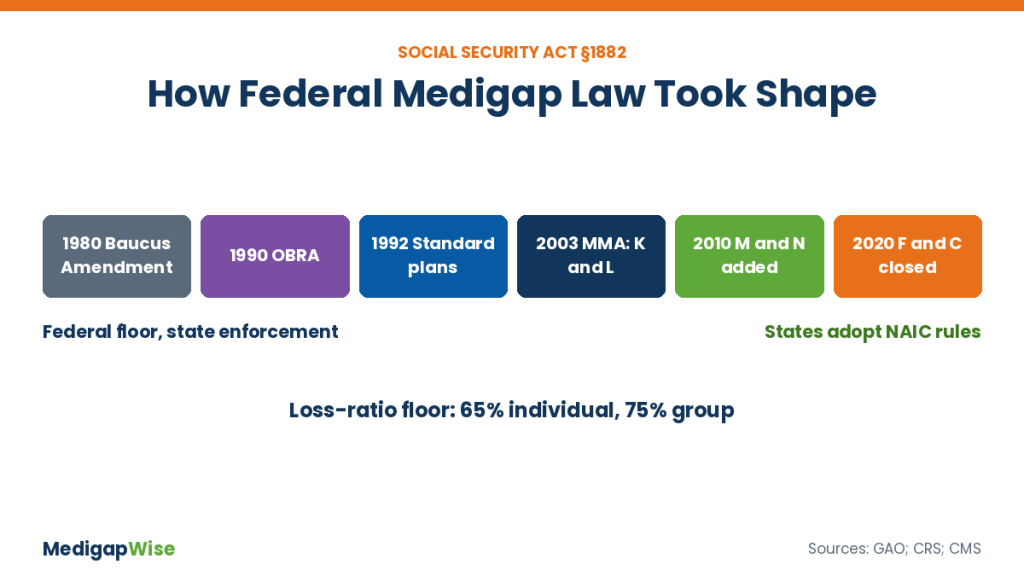
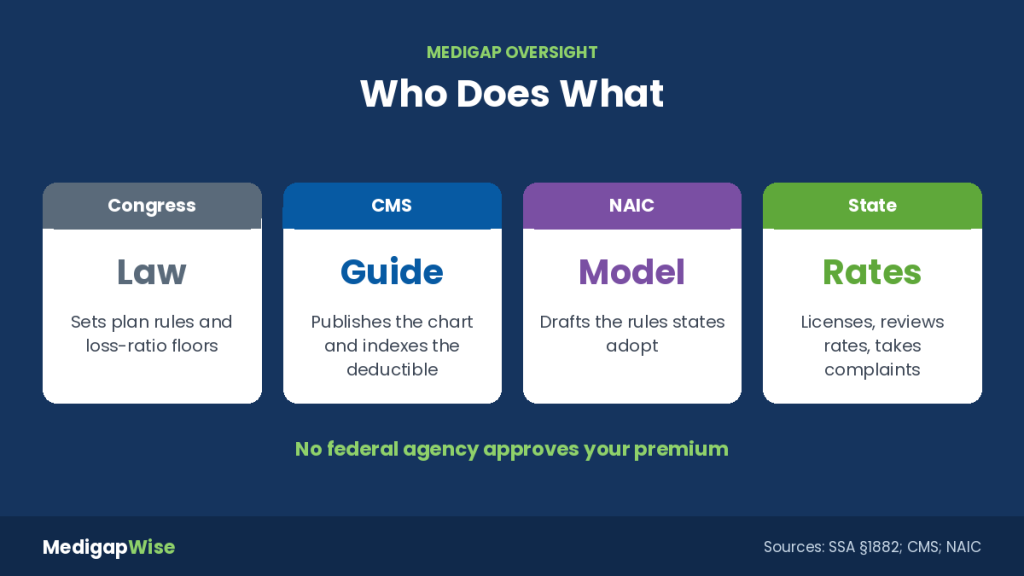
Medicare Supplement plans are regulated mainly by your state insurance department, working inside rules set by federal law (Social Security Act §1882) and a model law written by the National Association of Insurance Commissioners. CMS defines the standardized plans and publishes the buyer’s guide, but no federal agency approves your premium.
2027 by the Numbers
65%
Minimum loss ratio for individual Medigap policies sold after Nov. 5, 1991 (OBRA 1990)
75%
Minimum loss ratio for group Medigap policies (Social Security Act §1882)
$3,050
2027 high-deductible amount, indexed each year by CMS (CMS, Oct. 2026)
3 states
Massachusetts, Minnesota and Wisconsin standardize Medigap their own way (CMS)
Your Medicare card is federal. Your Medicare Supplement policy is not. It’s private insurance, bought from a private company, and most of the day-to-day oversight sits in a state office few people ever call until something goes wrong.
That split explains a lot of confusion. People phone Medicare about a premium jump, and Medicare can’t help. People assume a state can freeze rates, and it usually can’t. This page maps who holds which lever, where to file a complaint, how to look up the paperwork behind your premium, and what a regulator can and can’t do for you.