




Reviewed by Russell Noga, Licensed Medicare Insurance Broker (all 50 states) — Last updated November 11, 2026
Key Takeaway
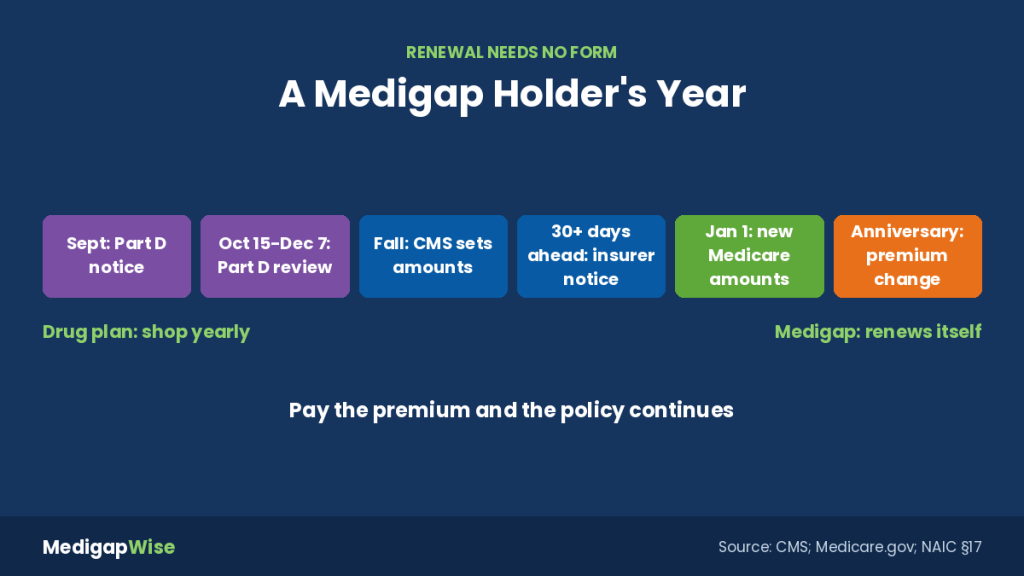
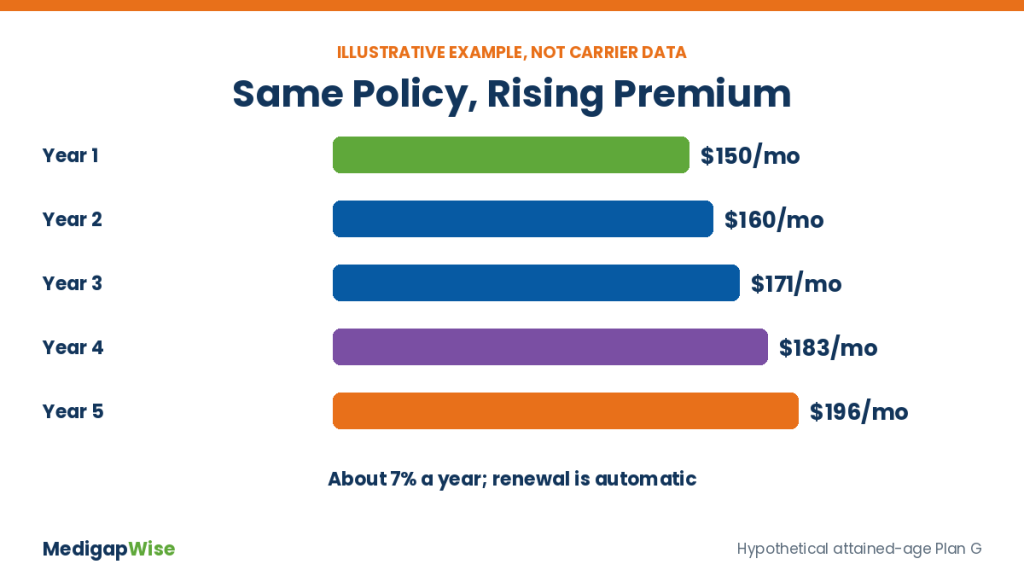
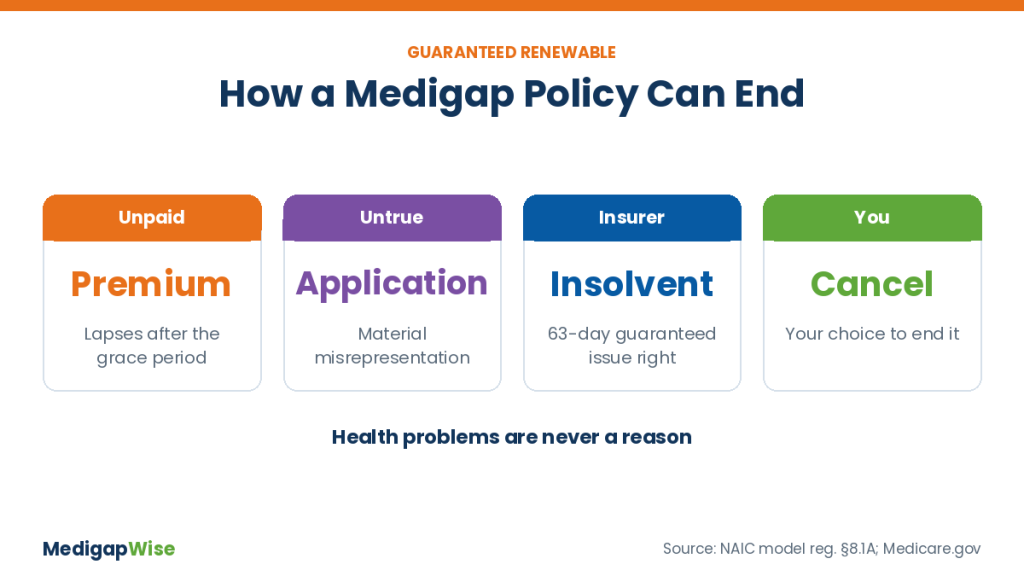
No, you don’t have to renew a Medicare Supplement plan every year: any Medigap policy issued since 1992 is guaranteed renewable, so it carries over automatically as long as you keep paying the premium and told the truth on your application. What moves from year to year is the price and the Medicare amounts the policy fills in, and your separate Part D drug plan is the piece that runs on the fall enrollment calendar.
2027 by the Numbers
$3,050
2027 deductible for High-Deductible Plans F and G (CMS)
$1,736
2026 Part A deductible that Plan G and Plan N pick up; 2027 amount not yet released (CMS)
30 days
Minimum notice before Medicare-driven benefit or premium changes (NAIC model rule §17)
$2,400
2027 Part D out-of-pocket cap, reviewed separately from Medigap (CMS)
Car insurance asks you to renew. So does a homeowner’s policy, and so does Medicare Advantage in a way, because the plan’s benefits and network are rewritten each January. It’s natural to expect a Medicare Supplement policy to work the same way, with a form to return or a deadline to watch every fall.
It doesn’t. A Medigap policy is closer to a standing contract: once issued, it stays in force year after year without any action from you. This guide covers the rules that make that true, the handful of things that still shift each year, the narrow ways a policy can end, and what deserves a once-a-year look anyway.