




Reviewed by Russell Noga, Licensed Medicare Insurance Broker (all 50 states) — Last updated November 12, 2026
Key Takeaway
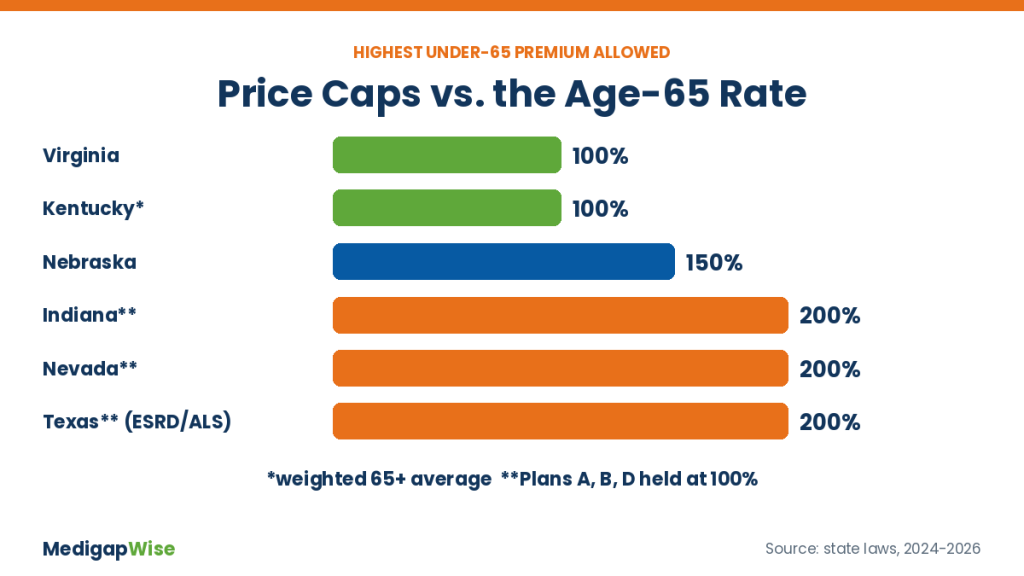
Yes, people under 65 on Medicare because of a disability can buy a Medicare Supplement plan, but only where state law or an insurer’s own choice allows it, because federal law doesn’t make insurers sell Medigap to anyone under 65. In states that do require it, the plan menu can be as short as Plan A and the premium can run up to double the age-65 rate, so the six-month Medigap open enrollment period that arrives at 65 is often the better time to buy.
2027 by the Numbers
Just under 7M
Medicare beneficiaries under 65, nearly all eligible through disability, ESRD or ALS (KFF, Oct. 13, 2026)
8% vs. 50%
Share of Traditional Medicare enrollees with Medigap, under 65 vs. 65 and older, 2024 (KFF)
24 months
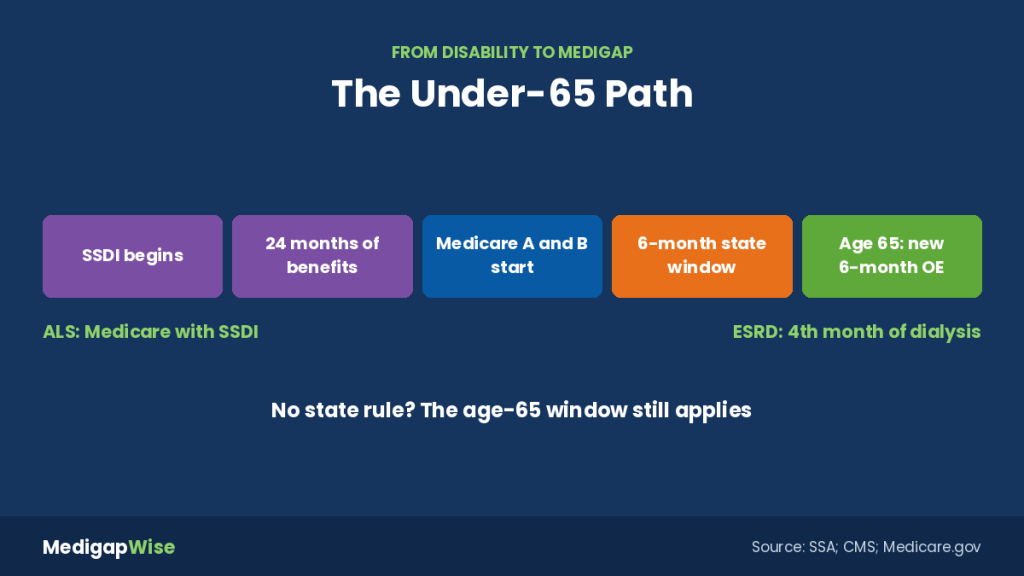
SSDI payments needed before Medicare begins, unless you have ALS or ESRD (SSA; CMS)
200%
Ceiling on under-65 premiums for most plans in Indiana, Nevada and Texas, vs. the age-65 rate (state law)
A 52-year-old on Social Security Disability Insurance gets the same red, white and blue Medicare card as a retiree, along with the same 20% Part B coinsurance and the same Part A hospital deductible. What it lacks is the same right to buy a policy that fills those gaps.
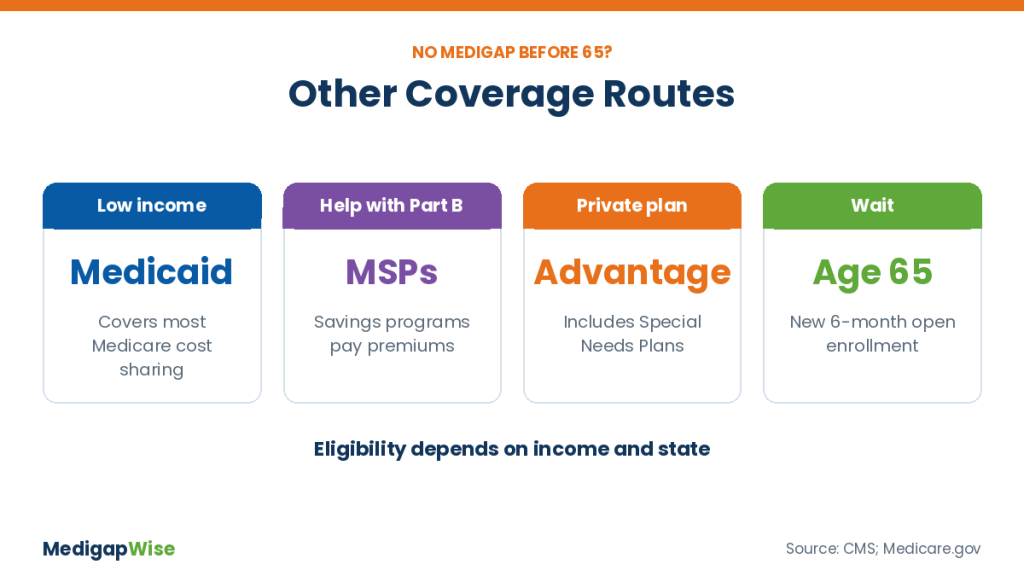
Below: how disability leads to Medicare, the states that close the federal gap, the plan letters and price limits they set, and other routes when your state offers nothing before 65.