




Reviewed by Russell Noga, Licensed Medicare Insurance Broker (all 50 states) — Last updated November 8, 2026
Key Takeaway
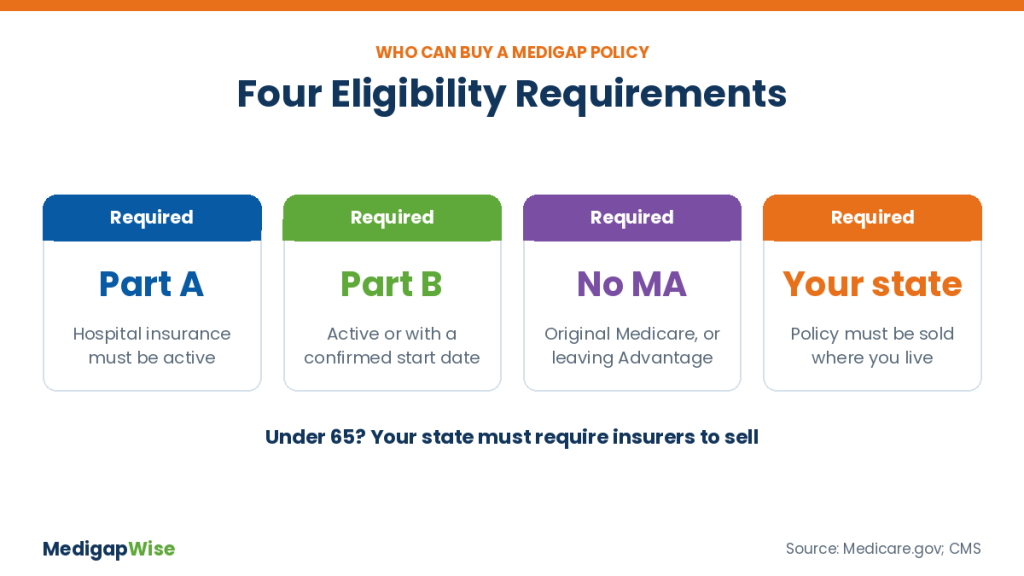
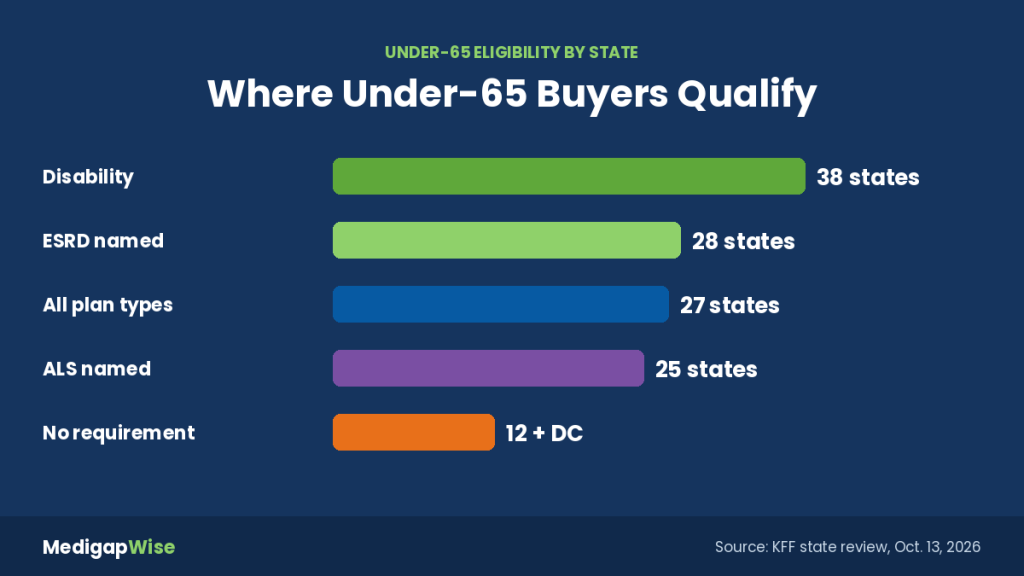
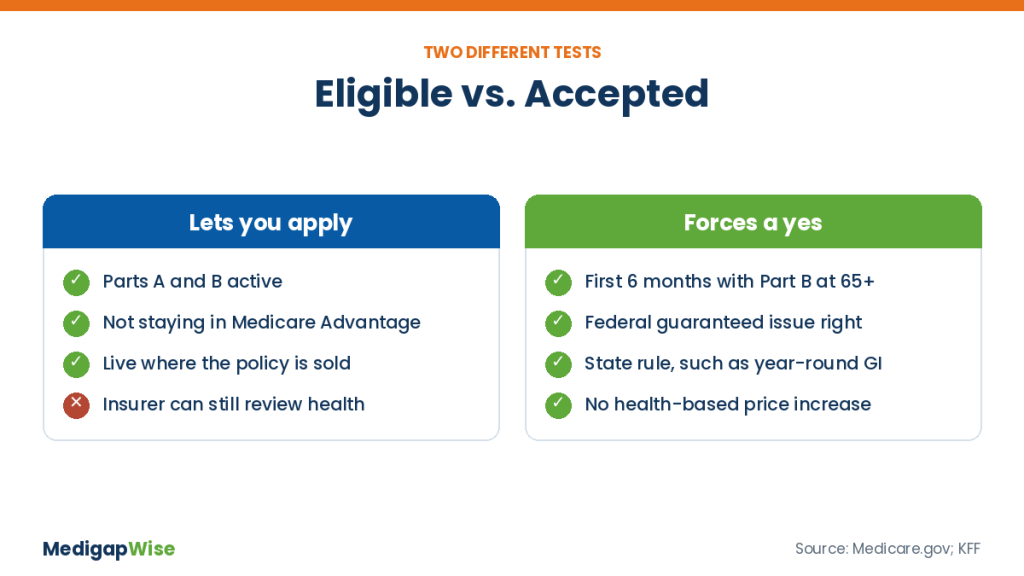
You’re eligible for a Medicare Supplement plan if you have both Medicare Part A and Part B, you’re not staying in a Medicare Advantage plan, and you live where the policy is sold; under 65, you qualify only if your state makes insurers sell to you. Eligible means you may apply. Guaranteed acceptance is a separate test that only your 6-month Medigap open enrollment period or a guaranteed issue right passes.
2027 by the Numbers
Jan. 1, 2020
Plans C and F closed to anyone who became eligible for Medicare on or after this date (Medicare.gov)
28 states
Explicitly require Medigap sales to under-65 enrollees with kidney failure (KFF, Oct. 13, 2026)
13 states
Make insurers issue a policy after someone loses Medicaid (KFF, Oct. 13, 2026)
2 years
Longest a Medigap policy can be suspended while you have Medicaid (KFF; CMS)
Most people assume Medicare Supplement eligibility is about age. It’s really about which parts of Medicare you hold and what other coverage sits next to it. A 72-year-old in a Medicare Advantage plan can’t buy one today, while a 45-year-old on disability may qualify, depending on her state.
Below are the rules that decide whether you’re allowed to buy a Medigap policy at all, the situations that block a sale, and why being eligible is not the same as being accepted. A checklist and a situation-by-situation table sit near the end.